

Franz Kafka
The Metamorphosis
Join us
September 5th, 2026
Global Schedule:
Mexico: 10:00 AM (UTC -06:00)
Colombia: 11:00 AM (UTC -05:00)
Europe: 5:00 PM CET / 6:00 PM CEST
Questions to guide your reading
About the Author
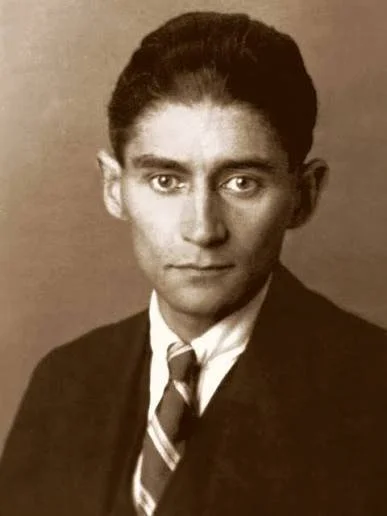
Born in 1883 in Prague in a Jewish family of merchants, Franz Kafka is one of the main figures of the transformation of European literature through the XXth century. He was a lawyer and a civil servant, while writing in the afternoons and nights.
Despite his tormented personal life, he was known for his kindness and sense of humour.
He spent the last seven years of his life ill with tuberculosis, until he died anonymously at the age of 43 in Austria. Most of his work was published posthumously, even against his will for it to be destroyed after his death.
Kafka wrote to uncover the quiet anxieties that lie beneath everyday life. His work explores alienation, guilt, absurdity, and the enduring search for meaning. His writing remains deeply unsettling because it transcends time, capturing the loneliness of being misunderstood, the weight of existence, and the unsettling truth that life rarely offers clear answers.
Context
The Metamorphosis was published in 1915, in the Austro-Hungarian Empire, in the midst of World War I, which was a context of constant cultural, social and political transformation. It is the longest of the stories Kafka considered complete and published during his lifetime. This book resonated with a generation deeply impacted by tremendous suffering, authoritarian power, isolation, and deep questions about the human condition, as well as the anxieties of modern life.
Modernity
What does Gregor’s transformation reveal about modernity’s treatment of human beings as workers, functions, or economic units?
Embodiment
How does Gregor’s new body transform his experience of himself, and what does the story suggest about the relationship between bodily appearance and human identity?
Religion
What religious or theological meanings might be found in Gregor’s transformation, suffering, guilt, and eventual death?
Community
What does Gregor’s exclusion from his family reveal about the conditions under which a person is recognized as a member of a community?
Communication
If Gregor remains conscious and capable of thought but can no longer communicate intelligibly, what does Kafka suggest about the relationship between language, recognition, and being human?
Recommended Editions
The Metamorphosis: Complete edition with original illustrations